When we first started exploring Europe, we traveled exactly the way many North Americans do:
- Stay in London for two nights
- Sightseeing in Paris for four nights.
- Nice, France, beach for three nights
- Back to London for 1 night – fly home
Everything was booked months in advance, every train reserved, every hotel confirmed. On paper, it looked incredibly efficient, but we slowly realized we spent an astonishing amount of our vacation checking out, hauling luggage through stations, finding our said accommodation, orienting ourselves again, and repeating the process in a new place before really feeling settled where we were.
We discovered there is a cost of constant transitioning. That knowing led us to travel differently, and our trips quietly changed shape over time.
Instead of trying to see five regions in two weeks, we choose one region, unpack for a while, and let the car connect us to everything, which is harder to do when using public transportation. We choose one region, rent a farmhouse, cottage, or apartment for a week or longer, unpack once, and let the days unfold from there. Instead of racing from destination to destination, we spend our time exploring everything in between. That’s where some of our favorite memories have come from, and it’s also why we’ve become much more intentional about the type of vehicle we choose for longer trips.
This is the blueprint we’ve followed ever since, and it has made us rethink how we rent cars to accommodate this new approach to maximizing our travel experience as a family of five.
The Hub-and-Spoke Model: A Smarter Way to Map Your European Journey
People often assume slow travel means staying in one place. For us, it means staying in one place long enough to understand it. We purposefully slow our pace to let a place wash over us.
To use a car metaphor, we think of every trip as a wheel. The apartment, farmhouse, or village house becomes the hub, and every day trip becomes another spoke.
One morning might lead to a vineyard someone mentioned at a local bakery. Another afternoon becomes a mountain drive simply because the weather is too hot to go to the city. A different day ends at the coast after deciding over baguettes that swimming sounds better than hiking.
Eventually, it’s time to move on and build another hub somewhere else.
Instead of racing through Europe, you’re exploring each region in widening circles before continuing the journey.
We choose a handful of hubs instead of a dozen hotels. Perhaps it’s a farmhouse in Tuscany for a week before moving north into the Dolomites. Maybe it’s a cottage in Provence followed by several nights in Bavaria. We’ve spent weeks exploring Portugal before slowly working our way toward Scandinavia, and we’ve followed the Tour de France across mountain villages that weren’t even on our original map.
The car quietly fades into the background and simply becomes part of daily life, as it should.
The Magic of the Hub: How Unpacking Once Changes Everything
One of the biggest surprises happened when we stopped living out of suitcases. Instead of trying to squeeze a family into hotel rooms every few nights, we’d settle into a regional home with enough space to actually relax. There was a kitchen, a washing machine, room for everyone to spread out, and a local market where we’d shop the same way our neighbors did.
Those weekly stays often cost less than constantly moving between hotels, and they gave us a priceless sense of place.
By the end of the week, we knew which bakery opened earliest, which café served the best coffee, and which scenic road to take when we wanted to catch the sunset.
Those weekly stays are often surprisingly economical compared to constantly changing accommodations, but the greatest reward is that, for brief moments, we stop feeling like visitors.
Without a car, we would not have as much flexibility to follow our curiosity, which is how we love to travel best.
A Longer Journey Asks More of the Vehicle: Upgrading Your Road Trip Logistics
High-speed rail is brilliant at connecting capitals, whereas cars excel somewhere else entirely. A car that works perfectly for four days isn’t necessarily the one you want to live with for four weeks. On longer trips, the right rental car fades into the background, and the trip, and all that lies ahead, creates a momentum that is hard to put into words.
It carries groceries from village markets, picnic supplies for alpine lakes, hiking boots still covered in yesterday’s trail dust, and the extra jacket someone inevitably forgot to wear that morning. It waits patiently while you linger over lunch in a small town or spend an unexpected afternoon wandering a local festival that spontaneously caught your attention.
The details that hardly matter on a one-week trip begin to matter more with every passing day:
- Unlimited mileage encourages detours instead of discouraging them.
- Comprehensive insurance becomes more valuable after weeks of parking in medieval villages, ferry terminals, mountain passes, and crowded city garages.
- Cross-border flexibility matters because the most memorable drives rarely stop neatly at a national border. Our children used to wave at abandoned border crossings as we drove from France into Spain, Slovenia into Austria, or Portugal toward northern Europe. Every crossing felt exciting, even when there was no longer anyone checking passports.
The longer we traveled this way, the more interested we became in finding the right structure for the journey itself. That shift is ultimately what led us to Renault Eurodrive.
Rather than adapting a traditional short-term rental model to a month-long trip, Renault Eurodrive is built specifically for longer European travel. A factory-new vehicle, comprehensive zero-deductible insurance, unlimited mileage, cross-border travel throughout most of Europe, and no large credit-card security hold all fit naturally with the way we already traveled. Once we collected the vehicle, we knew we were covered and could just enjoy the journey.
Finding the Best of Europe Between the Pins on the Map
Looking back after tens of thousands of miles traversing European roads, we rarely begin our stories with the famous landmarks.
We remember the sweeping curves through the Pyrenees after fresh snowfall and the quiet roads linking villages in Croatia. We remember pulling over beside Lake Bled to try the famous cream cake, as well as a progressive family picnic along the French Riviera that somehow stretched from Monaco to Cassis. We remember standing at the Westernmost point in Europe on the Portuguese coast, looking back toward home across the ocean. We remember the freedom to linger in Provence without worrying about train times because the market was too good to leave. We remember climbing up Spanish mountain passes in the Sierra Nevada we could not fathom tackling without a car, or pulling over in Denmark because a church concert caught our eye. We remember spending an afternoon exploring Gibraltar, even though it wasn’t on our itinerary, simply because there was no wait at the border and we happened to be driving by.
Those moments happened because we built a trip with enough flexibility to purposefully slow down and savor each experience, courtesy of Renault Eurodrive.
As Jack Kerouac wrote, “Nothing behind me, everything ahead of me, as is ever so on the road.”
This has become our philosophy for traveling in Europe. Create hubs and add spokes when inspiration strikes, but forever relish the moment that is presenting itself through slowing down and taking it all in. The adventures are often hidden around storied corners just waiting for you… Bon voyage. Buon viaggio. Buen viaje. Gute Reise. Boa viagem. Happy (slow) travels.
About the Authors
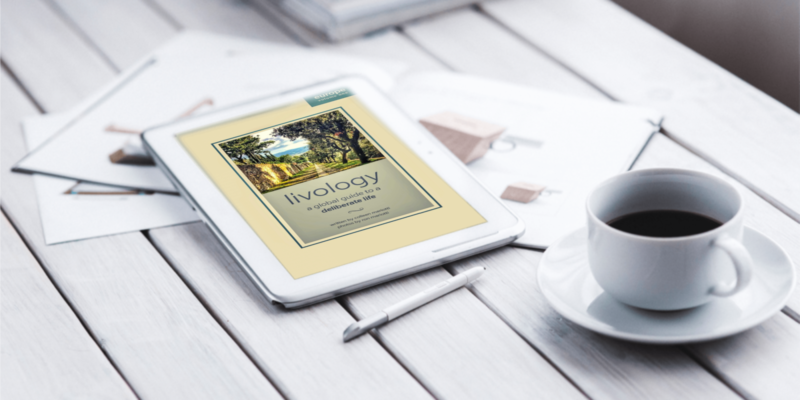
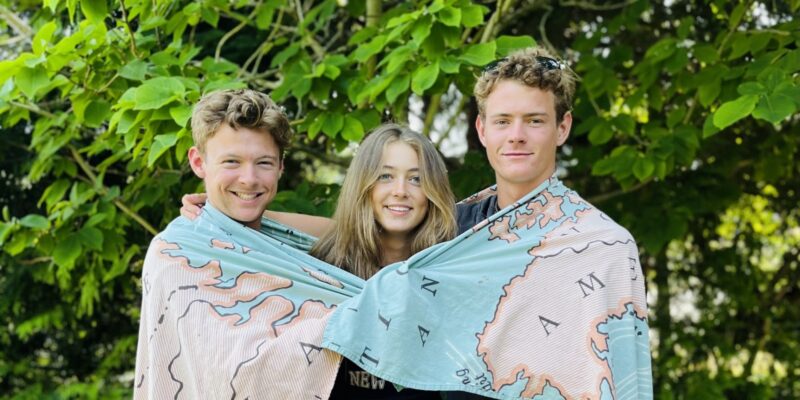
Ron and Colleen Mariotti are the founders of Livology, a platform dedicated to the art of intentional “Slow Travel.” Since 2013, they have navigated more than a decade of life on the road with their family of five, crossing dozens of borders and logging tens of thousands of miles across Europe. As dual Italian/American citizens, they bridge the gap between North American travel expectations and the reality of European logistics, serving as trusted guides for travelers seeking depth, culture, and seamless exploration.