Living WELLINGTON, New Zealand: What It’s Really Like to Visit, Stay, and Experience the City
“Passed years seem safe ones, vanquished ones, while the future lives in a cloud, formidable from a distance. The cloud clears as you enter it… I have learned this.” -Beryl Markham, West with the Night
WELLINGTON, New Zealand, is the southernmost capital city in the world, and when we arrived, we knew we were a very long way from home. We didn’t even know where home was after three years of traveling as a nomadic family. New Zealand is similar in size to the UK, yet home to only about 5.3 million people, compared with nearly 68 million in the UK. Around one-third of the country is protected as national parks and conservation land, a reminder that nature holds a central place in Aotearoa, the traditional Māori name for New Zealand, meaning the Land of the Long White Cloud.
We had landed, but it felt as though the cloud hadn’t quite cleared. We were driving on the left side of the road, bumping into people on the pavement as we hazily re-learned how to pass on the left. Locals spoke of the southerly wind, a biting, cold force, and we slowly understood why. We were used to southerlies meaning warmth, but south of New Zealand lay Antarctica, where most of the world’s freshwater ice resides.
The North Star had been replaced by the Southern Cross in the night sky, and even the moon appeared to us to be upside down. It is summer in NZ currently, long days, warm light, and a slower rhythm. New Zealand is among the first places in the world to greet each new day, a gentle reminder of how perspective shifts when you travel so far from the known.
Of course, we were disoriented only because we were accustomed to a completely different orientation, and that, we came to realize, was the gift New Zealand gave to our family.
60% of Americans don’t travel internationally at all, and of those who do, only a small percentage make it as far as New Zealand or Australia. We felt that telling the story of our year in Aotearoa would be a way to share what we noticed, felt, and learned, offering a chance to travel through a shared human experience, so the journey can belong to anyone who wishes to read along.
Wellington: A City Inside A Longer Story
“We do not inherit the earth from our ancestors; we borrow it from our children.” Māori proverb
Wellington sits inside a longer story than the city itself. Long before streets and suburbs, Te Whanganui-a-Tara was a place of arrival, shelter, and exchange. The Māori settled here with an understanding that land and water were not possessions, but relationships held in trust, shaped by use, and protected through care. In some ways, that sensibility did not vanish when the city arrived. It quietly informed how Wellington chose to grow.
What stands out, over time, is how much of the city remains shared.
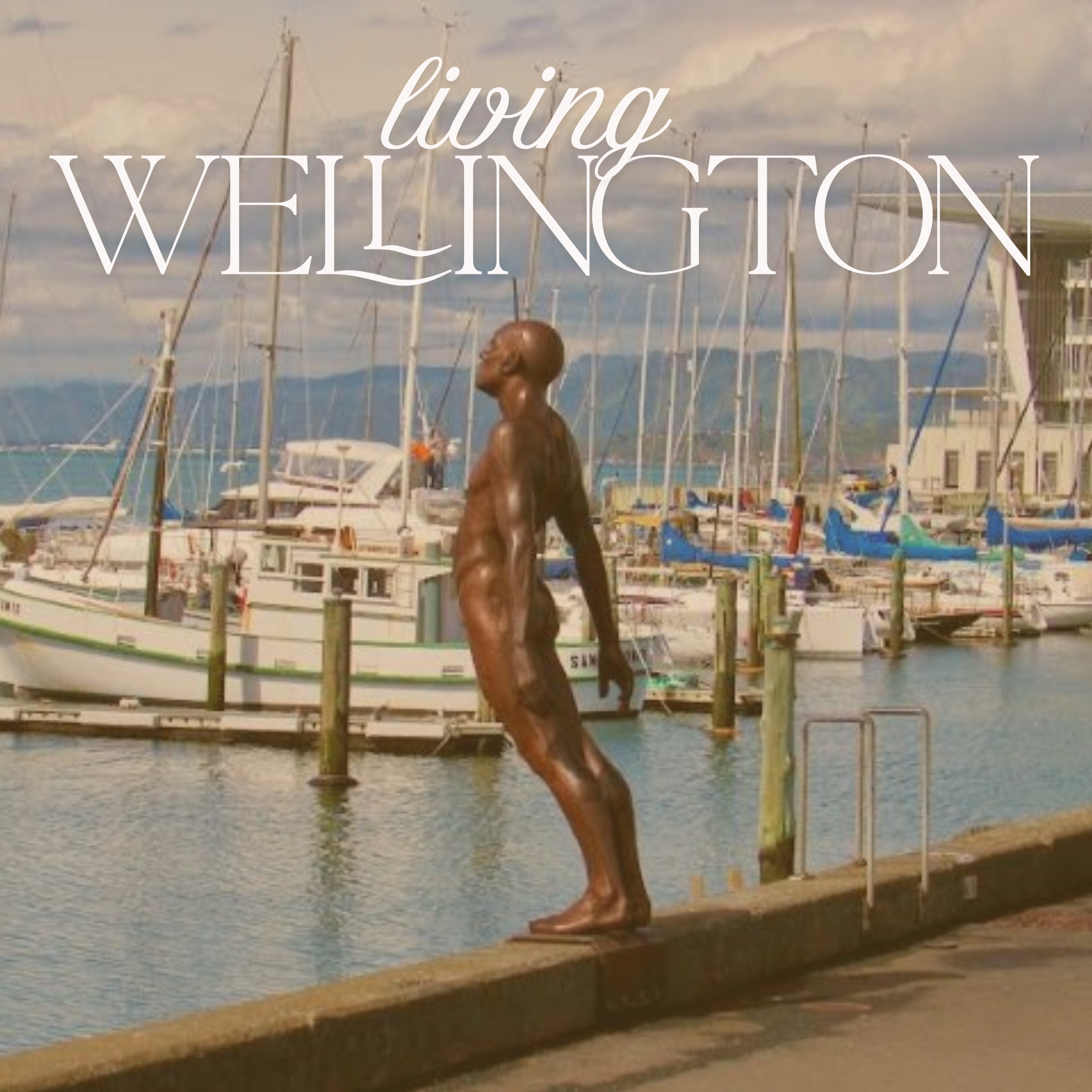
The waterfront is a commons. People walk its length in all weather, stopping just to be in this magnificent place. Children leap from concrete steps into cold water at Oriental Bay. Office workers eat lunch beside retirees and couples. Cyclists, runners, parents with strollers, and swimmers move side by side. No section is reserved solely for spectacle; the value is in use versus its display. The city seems to have decided long ago that accessibility is foundational to Wellington, which feels very rare and distinguished.
Museum of New Zealand Te Papa Tongarewa, known as Te Papa, rises from this same ideology, intentionally communal, spacious, and deliberately free. It receives school groups, families, visitors, and locals with equal ease. This incredible museum is placed directly in the path of daily life. You pass through it on your way to the water, skatepark, café, and bus stop. The building meets the harbor graciously, continuing the conversation between land, people, and story.
Where the City Gathers: Public Life in Wellington
Further in, Wellington keeps offering itself.
The Wellington Central Library, Te Matapihi ki te Ao Nui, fills from morning to night as the city’s living room. Studious patrons spread notebooks across tables as regular visitors read the daily paper. The café is aptly named HOME. Children move between shelves and even check out toys, games, and puzzles. The space is warm, practical, democratic, and lively.
Cuba Street bends and widens to accommodate whatever the day brings: music drifting from doorways, spontaneous conversations, political demonstrations, celebrations that close the street without apology. Waitangi Park absorbs crowds while somehow maintaining its calm atmosphere. On weekends, families gather along Clyde Quay and Mount Victoria, watching the weather roll in from the Cook Strait
Public life here feels learned over time and shaped by repetition, trust, and a shared understanding of how space is held together.
Even the wind participates. It shapes how people dress, how they walk, and how buildings lean into weather rather than resist it. You learn quickly that stillness in “Welly” requires attentiveness within movement.
Living in Wellington’s Neighborhoods
The city is shaped by hills that insist on effort. Streets like The Terrace and Kelburn Parade pull you upward, rewarding the climb with views that stretch across the harbor to Somes Island, where histories of arrival, quarantine, and return sit quietly in the distance. Houses lean into the slope, and cascading gardens grow where they can. Life arranges itself around what the land allows.
In Newtown, murals trace decades of stories, music drifts from open windows, and voices overlap at markets where aromas of fresh bread, sizzling sausages, and fragrant curries thread through the streets. Cafés host giant Jenga games, conversations, and occasional impromptu performances. Aro Valley offers a gentler cadence: hills cradle wooden houses softened by warm light, runners and cyclists climb winding streets, and neighbors linger over sunlit brunches or small weekend concerts, sometimes featuring Māori music, storytelling, or cultural performances.
Kelburn reveals the city’s structure: the cable car climbs steadily, linking the university and Botanical Garden to the city below, where seasonal blooms of camellias, magnolias, and rhododendrons color harbor views. In the Miramar Peninsula, beaches open to the wind and harbor, while creative work hums quietly behind ordinary facades, film studios, craft workshops, and galleries integrated into daily life. The pulse of the city carries through these neighborhoods: the roar from Sky Stadium during an All-Blacks match, the energy of weekend sailing regattas in the bay, or street performances and music spilling onto promenades in summer evenings. Culinary life threads seamlessly through it all: mince & cheese pies, roasted lamb, loaded kumara fries, fresh seafood from harbor markets, and the rich aroma of flat white and long black coffee orders at every corner (my personal favorite), making daily routines feel intentional and celebratory, which perhaps they should be.
What Endures: What Living in Wellington Teaches You
Public space is treated as something alive, maintained through presence and participation. Legacy in New Zealand is not defined by scale or permanence, but by continuity and stewardship.
Living Wellington means noticing how the city gives its people room to care for it and how that trust is honored (and when it is not, people speak out). And eventually, almost without noticing, you begin to carry the same ethic with you. You move with more care, lingering simply to be present, and you notice what has been handed down, will be handed forward.
Wellington’s layered story reminds us that what we receive from a place also carries a responsibility to tend to it. We know from experience that understanding doesn’t arrive all at once, but if you stay long enough in Wellington, and the greater land of Aotearoa, opening yourself up to its lessons, “The cloud clears as you enter it…”
Living WELLINGTON Like A Local
To plan your Living WELLINGTON experience, book a consultation with us. We will give you our personal curated recommendations for how to make the most of your adventure, because when it comes to WELLINGTON, adventure is almost certainly guaranteed.