There are only two places in the world where we can live happy, at home and in Paris. Ernest Hemingway
The first time I ever set foot in Europe was for our honeymoon 25 years ago. My best friend’s father gifted us a trip to Paris for our wedding, and I felt, in that moment, I was floating in the air. My adventures in Paris, however, started long before our honeymoon. One fine spring day, as a freshman at the University of Washington, I noticed a book on a bench underneath a blossoming cherry tree. I was drawn into the dappled light to sit on the weathered, peeling, yet inviting green bench. I brushed my hand over the book’s cover, depicting a faded picture of the Seine and the title “A Moveable Feast: Sketches of the author’s life in Paris in the Twenties” By Ernest Hemingway.
There was no one else in the square, cherry blossoms falling and dancing in the gentle breeze as weightless as snow. I decided in that moment that I could just as well be in Paris sitting in this scene and I picked up the book and turned one yellowed, brittle page at a time … “It was a pleasant café, warm and clean and friendly, and I hung up my old waterproof on the coat rack to dry and put my worn and weathered felt hat on the rack above the bench and ordered a café au lait. The waiter brought it, and I took out a notebook from the pocket of the coat and a pencil and started to write.”
I sat on that bench for all 150 (or so) pages that divine spring afternoon. Within these pages, I met Hemingway’s devoted wife, Hadley, Gertrude Stein, and Sylvia Beach, and was introduced to his more tumultuous acquaintances, F. Scott Fitzgerald and Ezra Pound, whom he portrayed with a mix of admiration, criticism, and nostalgia. But most importantly, he took me to Paris. In my mind’s eye, I was on the Left Bank in one moment and then at the Rue Mouffetard following his footsteps down the market street. He took me on a stroll through Luxembourg Gardens and past his favorite booksellers and fisherman friends along the Île de la Cité. The memoir was laced with confession and regret, romance and angst, genius and struggle.
I set the book down as the last few rays of light left my little private corner of spring, and I walked back to my dormitory, dreaming of the day Paris and I would meet.
It is a city we have returned to many times for different reasons, and because of its magnetism, I am using some of my favorite passages, noted in my journal on that bench many years ago, from A Moveable Feast, to frame this LIVING PARIS guide.
Never to go on trips with anyone you do not love.
Paris is often called the City of Love, and having spent our honeymoon in a sweet hotel just off The Avenue des Champs-Élysées, I can truly say we fell in love all over again. Paris earned its reputation for love through centuries of history, art, and atmosphere, blending into something uniquely romantic. From its rise as a cultural and political heart in medieval Europe to its transformation into a modern city of grand boulevards and glowing lights during Haussmann’s renovation, Paris became a place where beauty and emotion naturally intertwine. Its artistic legacy, from Romantic poets to groundbreaking painters, infused the city with passion, while iconic settings like the Eiffel Tower and the banks of the Seine River created unforgettable backdrops for connection and intimacy. Add in candlelit cafés, evening strolls under gas-lit streets, and countless real and fictional love stories, and Paris emerges as a living symbol of romance.
And remember, if Parisians seem unfriendly at times, it is because a staggering 18+ million international visitors descended on the City of Love in 2025. There is frustration that comes with overtourism, and there are things we can all do to ease this when planning to spend time in Paris.
The people that I liked and had not met went to the big cafes because they were lost in them and no one noticed them and they could be alone in them and be together.
Café culture lies at the very heart of Paris, shaping its identity just as much as the iconic landmarks. Since the opening of Café Procope in the 17th century, cafés have served as vibrant meeting places for writers, philosophers, and artists. To sit at a terrace table, sipping coffee while watching life drift by, is one of the most quintessential Parisian experiences, unhurried and immersive, if you allow it to be. The best Parisian cafes offer both intimacy and anonymity. Whether in historic icons like Café de Flore and Les Deux Magots or in modern coffee spots, Parisian cafés invite you to slow down, linger, and maybe even quietly belong for a time to the very soul of Parisian life.
When spring came, even the false spring, there were no problems except where to be happiest. The only thing that could spoil a day was people, and if you could keep from making engagements, each day had no limits. People were always the limiters of happiness except for the very few that were as good as spring itself.
Spring in Paris transforms the city into a living postcard, where soft sunlight, chestnut blossoms, and mild air invite both locals and visitors to slow down and step outside. It’s the perfect season for wandering through elegant green spaces like the Jardin des Tuileries or the Luxembourg Gardens, where Parisians gather to read, picnic, and bask in the renewed energy of the season. Beyond the city, spring breathes new life into day trips, from the grandeur of the Palace of Versailles, where hedges bloom in perfect symmetry, to the dreamy colors of Claude Monet’s Garden, bursting with the very blooms that inspired Impressionist masterpieces. In this season of renewal, Paris becomes an experience shaped by light, nature, and the simple and fashionable joy of being outdoors.
Paris was always worth it, and you received return for whatever you brought to it.
There’s a certain magic in arriving in Paris with an open heart, a curious mind, and a sense of imagination, but without rigid expectations of what the city should be. Paris is not a single, polished postcard; it is vast, layered, and alive with contrasts, where quiet morning streets give way to restless boulevards, and beauty exists alongside the raw pulse of everyday life. It is precisely this tension, the collision of ideas, classes, and ways of living, that has shaped history here, giving rise to movements like the French Revolution, fueling artistic rebirths such as the Renaissance, and sustaining resilience through moments leading up to the Liberation. These truths exist in the fabric of the city, whether you choose to see them or not, but those who embrace both the romance and the contrast leave with something deeper. To truly experience Paris is to accept its contradictions, the poetic and the practical, the dream and the disruption, and to let the city reveal itself on its own terms. In doing so, Paris is capable of mirroring what you see but also how deeply you are willing to look.
In a city like Paris, where there was a way of living well and working, no matter how poor you were, it was like having a great treasure given to you.
Paris rewards the traveler who knows how to move through it with grace and appreciation. Living well isn’t necessarily about splurging, but Parisians pride themselves on knowing where to look. Consider a thoughtfully designed stay like Hôtel des Grands Boulevards or a quiet boutique hideaway in the 9th or 11th, where style and location meet without the buzz of the central tourist zones. For food, follow the true rythme parisien: a morning espresso standing at the zinc bar, a fixed-price formule lunch at a neighborhood bistrot, or a late apéro picnic built from market finds on the hilly paths of Parc des Buttes-Chaumont. Use tools like the Paris Museum Pass strategically, stacking visits to maximize value, and balance it with time in smaller, lesser-known museums or simply wandering through outer arrondissements where every day Paris unfolds from your sunshine yellow café table. In spring especially, when the city spills outdoors, the greatest luxury becomes access to light, space, birdsong, and to the quiet corners where Paris reveals its real treasure by showing visitors that are paying attention how to fluently live within the city’s rhythm.
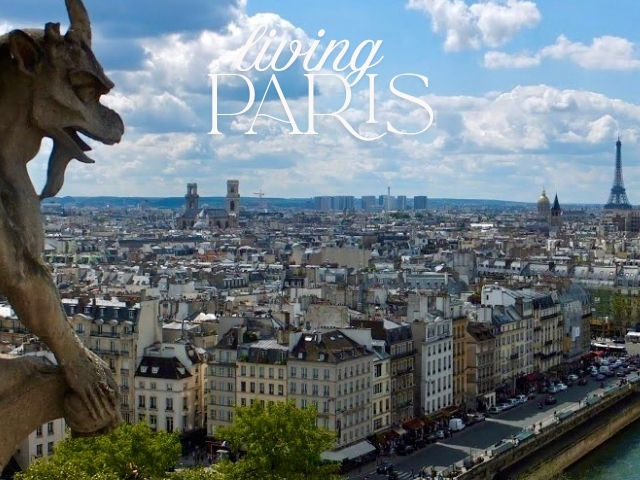
I would stand and look out over the roofs of Paris and think, ‘Do not worry’.
To understand Paris in a meaningful way, it helps to see beyond the collection of sites to the masterfully structured, layered cityscape that it is. The 20 arrondissements spiral outward from the historic core, the 1st anchored by the Louvre Museum, each with its own identity, from the intellectual traditions of the 5th and 6th to the more residential, lived-in character of the outer districts. Architecturally, Paris is a dialogue across centuries: medieval remnants like Notre-Dame Cathedral coexist with the rational symmetry of classical royal projects, and most visibly, the 19th-century transformation under Haussmann, whose boulevards imposed order, radiant continuity, and a distinct visual harmony still sought after today. Layered onto this are civic and cultural monuments, the Palais Bourbon, seat of the National Assembly, or the Musée d’Orsay, a former railway station turned temple to modern art, that reflect a nation deeply invested in its institutions and cultural legacy. To visit Paris with your whole heart is to move between these layers: to trace the arc from monarchy to republic, from medieval streets to modern boulevards, and to step into museums and relish them as chapters in a larger narrative. In doing so, the city reveals why it inspires such love in all who experience it. Its beauty is seasoned by the ideas, struggles, and achievements embedded in its very form.
If you are lucky enough to have lived in Paris… then wherever you go for the rest of your life, it stays with you.
And for me, the love affair started long before ever setting foot in France. I often think of myself as that university student on the bench, reading this gift of a book seemingly left just for me. At some level, I knew someday I would experience Paris, and I could have never dreamed of the fairytale that would follow.
The title of Hemingway’s memoir is a play on words based on the religious definition of a “movable feast” on a holiday, like Easter or Thanksgiving, that changes dates every year. Hemingway adapted this to mean that the wonder of Paris was not fixed, but could be enjoyed anywhere, any time. The last words of his text, published posthumously in 1964…
For we have eaten the fruit of this tree… there is never any ending to Paris.
To plan your Living Paris experience, book a consultation with us. We will give you our personal curated recommendations for how to make the most of your adventure, because when it comes to Paris, planning creates more time for lingering in French cafés.